
 ← Back to All Projects
Potable Water Production & Transmission Master Plan: Modernizing Water Supply Infrastructure to Meet Future Demand
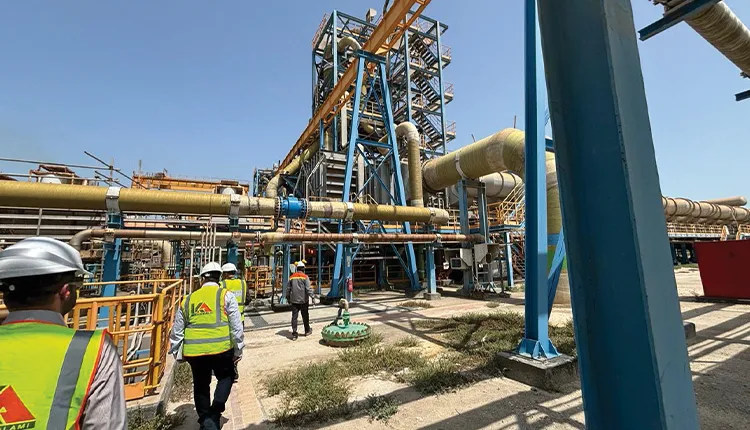
The Potable Water Production & Transmission Master Plan aims to provide a comprehensive strategy for Bahrain’s water supply network from 2024 to 2032. The project, commissioned by the Electricity and Water Authority (EWA), engages K&A as the lead consultant for studies and design. With an estimated construction cost of $260 million and a design completion target of 2025, the initiative focuses on optimizing production and transmission facilities to meet anticipated potable water demand. The existing network comprises seven desalination plants totaling over 900,000 m³/day, 66 water stations, 130 ground storage tanks, 41 elevated reservoirs, and 620 kilometers of transmission pipelines.
Matching Bahrain’s Water Planning with Population Demand
The lack of a high-resolution population distribution model limited the accuracy of demand forecasting and introduced inefficiencies in long-term planning. The water network also required tailored interventions for commercial, residential, and industrial sectors, each with distinct demand patterns. Another challenge was aligning the new master plan with Bahrain’s national water strategy goals—such as reducing nonrevenue water and improving per capita water consumption—which added further complexity. Moreover, independent water service providers impose capacity charges on EWA, creating additional pressure to balance production, optimize operations, and ensure sustainable long-term water availability.
GeoAI-Driven Water Demand Forecasting and Smart Planning Solutions
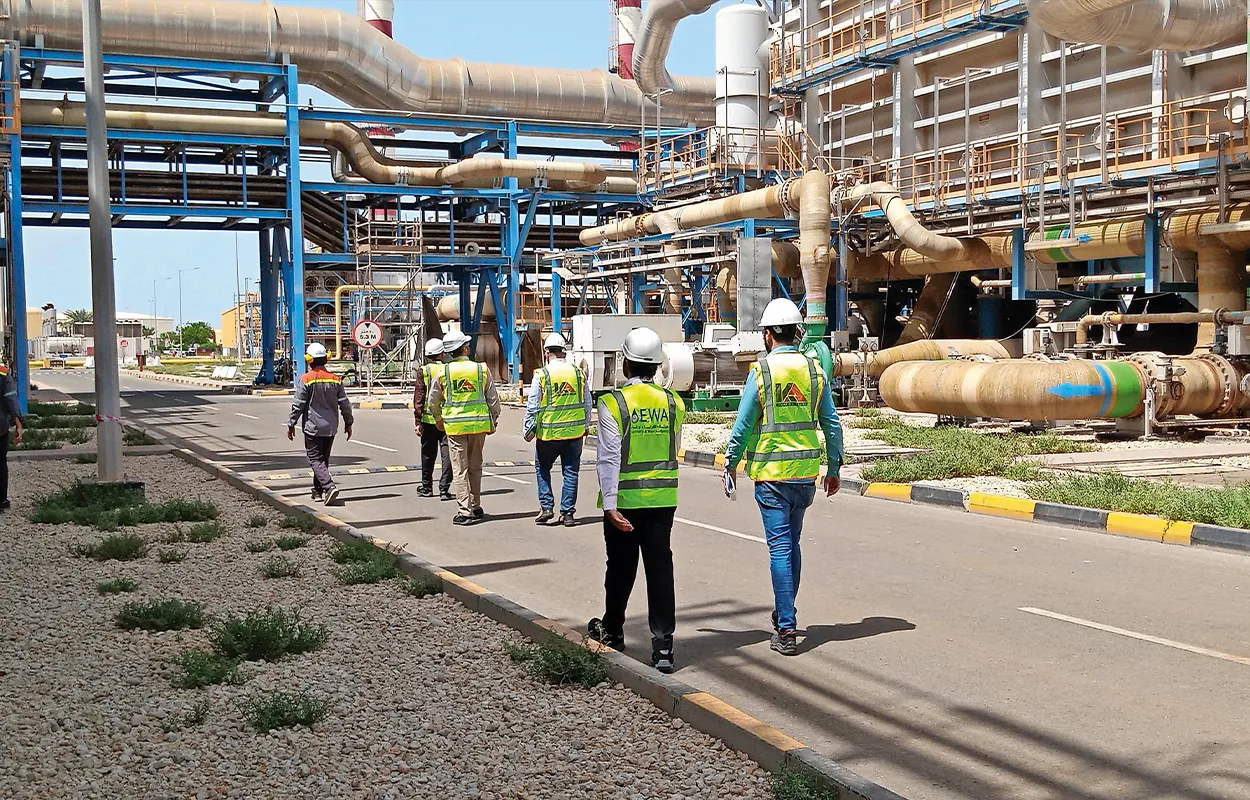
K&A conducted comprehensive data collection, site visits, water demand forecasting, and analysis of production and transmission facilities. The team updated the existing water model, proposed three production alternatives, and integrated energy-saving strategies while planning for future expansions, cash flows, and phased implementation.
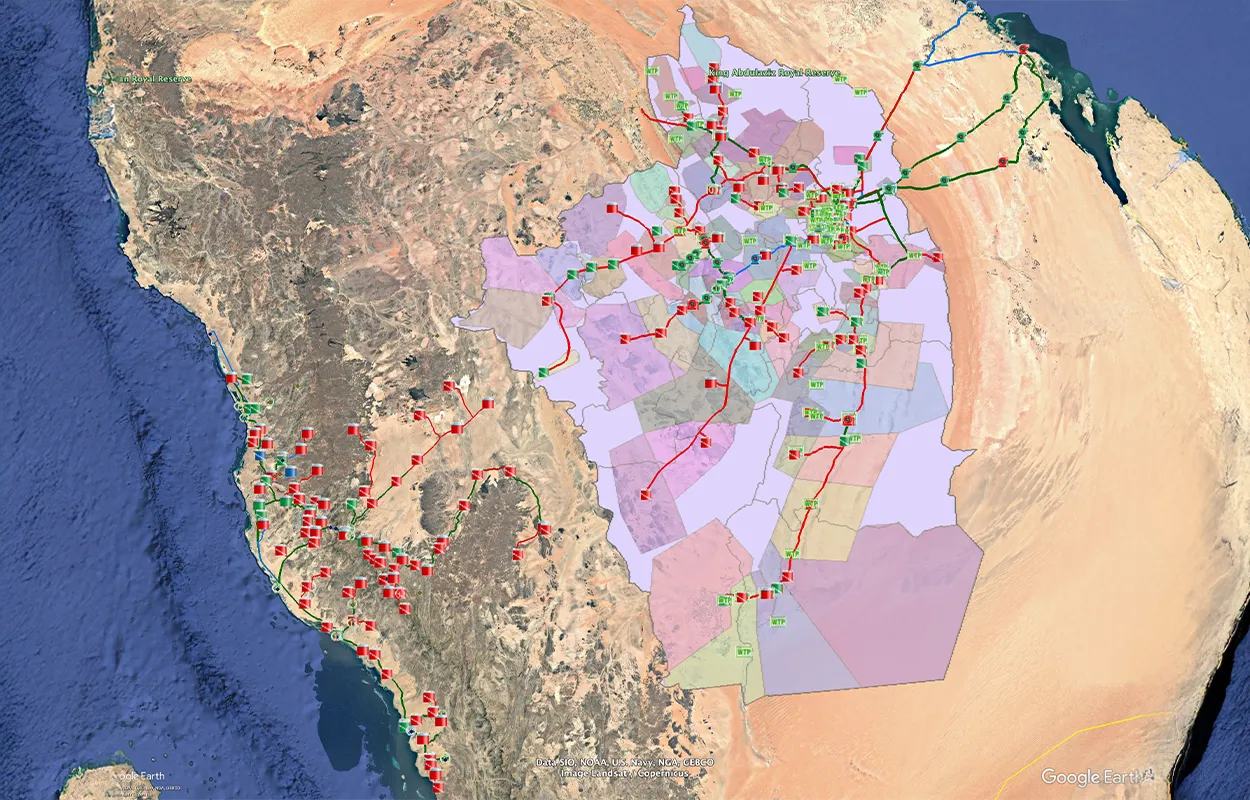
The project introduced a GeoAI-based methodology for water demand forecasting, a first for national utility planning in the region. Using satellite imagery, K&A developed a detailed 50×50 meter population grid and trained machine learning models to reflect spatial distribution. This grid enabled disaggregated forecasting by sector and non-revenue water, integrating historical consumption data from 2012 to 2023 alongside infrastructure expansion and national development plans. The system continuously learns and adapts to changes in land use, population growth, and planning policies for responsive decision-making.
Empowering Communities with Sustainable Water Solutions
The Bahrain GeoAI methodology demonstrates the value of integrating artificial intelligence and geospatial analysis into national utility planning. By replacing outdated static models with a live, learning system, EWA has significantly enhanced long-term water security and operational efficiency. The project sets a precedent for regional governments seeking to modernize infrastructure planning through digital transformation, offering a scalable model for sustainable, data-driven water resource management.