

Building a more reliable water supply in Basra
For generations, the Shatt Al Arab has supported communities, agriculture and industry across southern Iraq. Reduced river flows, prolonged drought and seawater intrusion now threaten the quality and availability of freshwater, placing growing pressure on water supply in Basra.
Khatib & Alami (K&A) is working with the Basra Governorate to develop the Basra Emergency Water Plan. The plan brings together water treatment, desalination, transmission infrastructure and strategic storage to address current challenges and meet demand through 2045.
Its central principle is to plan these assets as one connected system, aligning investment in new capacity with how water will reach the communities and industries that need it.
Planning for demand through 2045
Basra’s population is projected to reach approximately 7.5 million by 2045. Water demand is expected to more than double over the same period, creating a substantial gap between future supply and demand unless additional infrastructure is developed.
K&A’s work with the governorate began in 2019 with a water contingency master plan. The Basra Emergency Water Plan builds on that foundation, combining detailed technical analysis with a long-term approach to water provision across the governorate.
Expanding treatment and diversifying sources
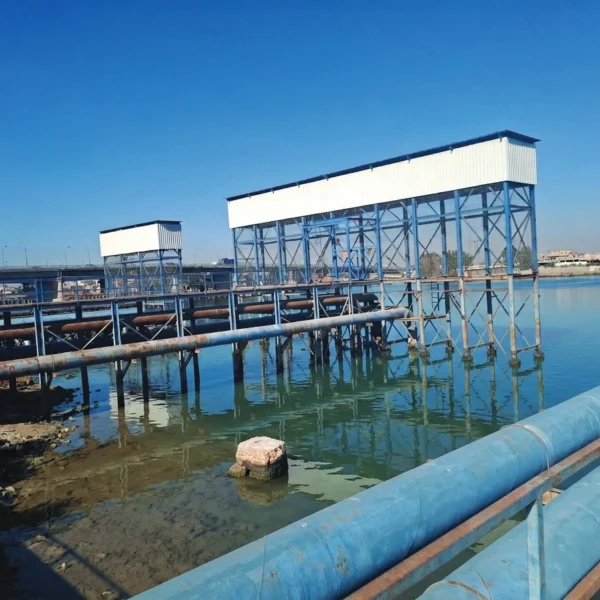
Existing water infrastructure in Basra.
Much of the existing supply comes from compact treatment plants that cannot reliably achieve the targeted treated-water quality.
Across 20 treatment locations, the program proposes increasing total design capacity by almost 50%, from 69,292 to 103,667 cubic meters per hour. Conventional treatment plants, reverse osmosis facilities, upgrades to existing assets and new infrastructure will support this expansion.
Desalination is an important part of the response to rising salinity. One proposed seawater desalination facility is planned to provide one million cubic meters of water per day. This would add a significant source of potable water and reduce reliance on increasingly stressed freshwater supplies.
The aim is to increase capacity while developing a more diverse and resilient portfolio of water sources.
Connecting infrastructure across the governorate
Additional treatment capacity must be matched by the infrastructure needed to transport and distribute water.
The plan includes 1,207 kilometers of transmission pipelines. Among these, 716 kilometers are existing, 288 proposed, and 203 under construction. This network connects treatment facilities, storage assets, and distribution networks serving population centers like Al-Faw, Al-Qurna, Al-Zubair and Abu Al-Khaseeb.
Stronger connectivity is intended to improve operational flexibility, accommodate future growth and support continuity of service across the governorate.
“Creating a dependable water system is not just about additional treatment capacity,” said Samer Husseiny, Associate Principal – Water Supply. “By planning the infrastructure as one connected system, our team can align decisions with demand, source reliability and operational requirements to create a more resilient network.”
Using storage to support continuity
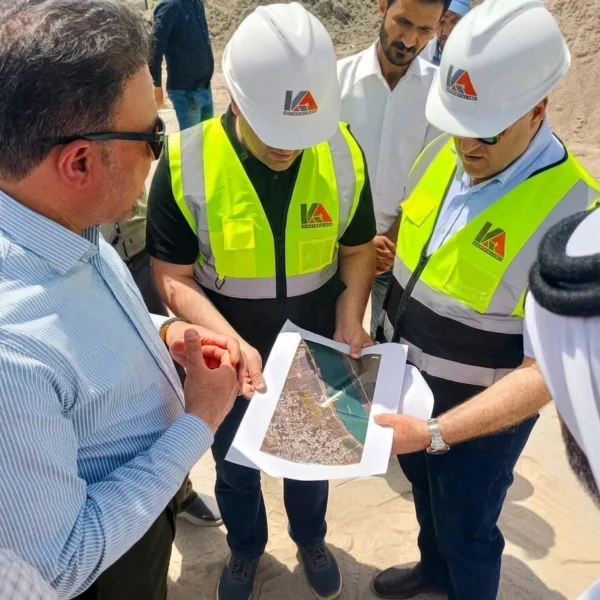
K&A’s team reviews project information during a site visit in Basra.
Strategic water storage serves as a reserve when supply is interrupted. It also helps balance demand fluctuations and allows planned maintenance with greater operational flexibility.
K&A’s team assessed storage needs against population served, source reliability, transmission distances and access to alternative supplies. This analysis identified locations where additional storage would offer the greatest benefit during emergencies, infrastructure failures or water quality incidents.
A long-term approach to water security
The plan draws on K&A’s water planning and design experience across the Middle East, including desalination, transmission and strategic storage projects in Saudi Arabia, Oman and Qatar.
“This work addresses both today’s water challenges and the demands of tomorrow,” said Rami Hanna, Director – Basra. “By strengthening reliability, improving resilience and diversifying water sources, the plan will help provide a more secure water future for the communities, businesses and industries that depend on it.”
For Basra, water security depends on how these investments work together. The coordinated approach addresses immediate pressures while planning for reliable access to water for millions of people in the decades ahead.