

Not Empty Land: Why Rangelands in the Gulf and MENA Matter
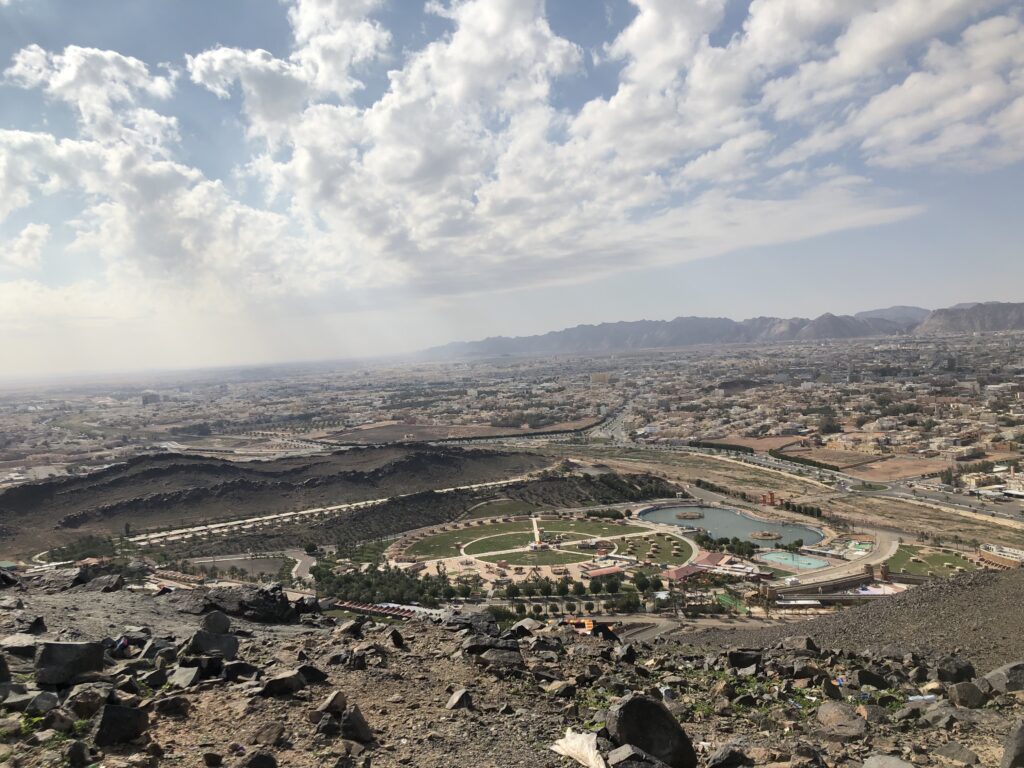
Rangelands in the Gulf and MENA may appear as drylands, desert margins, or open-grazing landscapes. But they are not empty. Even in arid regions, rangelands can support seasonal grazing, native vegetation, water movement, biodiversity, rural livelihoods, and cultural memory. Their value is not always visible.
For World Day to Combat Desertification and Drought, the theme “Rangelands: Recognize. Respect. Restore.” brings these landscapes into focus. For this region, the message is especially relevant.
Before land is developed, protected, or restored, it needs to be properly understood.
Recognize: Using Digital Tools to Understand Land and Climate Risk
Recognizing rangelands means looking beyond the surface and understanding what the land already does. How does water move through it? Where is vegetation under stress? Which areas are most vulnerable to drought, flooding, erosion, sand storms, or other climate-related risks? What patterns are changing over time?
Digital tools can help answer these questions.
Through GIS, remote sensing, UAV mapping, digital twins, and geospatial platforms, large and complex landscapes can be read with greater accuracy. These tools help decision-makers recognize and map land conditions, monitor change, assess vulnerability, and plan with a clearer understanding of risk.
K&A’s Omani Digital Twin Reality Model offers one example of how this works in practice. Covering approximately 250 square kilometers in and around Muscat, the project created a detailed 3D reality model of urban and natural environments to support climate-related scenario planning.
By helping model risks such as flooding, cyclones, sand and dust storms, and drought, the digital twin gives decision-makers a stronger basis for mitigation planning, urban planning, and crisis preparedness.
Recognition starts by making the land visible. But visibility is only the first step. The next question is how that understanding shapes planning and development decisions.
Respect: Spatial Planning for Sustainable Development
Once the value and vulnerability of the land are visible, planning can no longer treat open landscapes as blank spaces. It needs to account for what the land already supports, where growth is appropriate, and how development can move forward with less disruption to fragile environments. For rangelands in the Gulf and MENA, this is especially important because development decisions often take place in landscapes where ecological value is not immediately visible.
This is where strategic spatial planning becomes essential. It helps governments and developers move from isolated land-use decisions to a clearer view of how development, infrastructure, natural systems, and communities interact across a territory.
The Oman Regional Spatial Strategy reflects this approach. Designed to guide sustainable growth and balanced development across the Sultanate, the strategy brought together spatial planning, environmental studies, socioeconomic assessment, and geospatial analysis to help identify development corridors, regional growth centers, and environmentally sensitive zones.
Respecting land means balancing development with the natural environment through infrastructure and growth that support communities while protecting the systems that sustain the landscape.
But in many places, the balance has already been disrupted. That is where restoration becomes necessary.
Restore: Supporting Dryland and Wadi Rehabilitation
Restoration in arid regions is about helping them function again.
When water movement is disrupted, vegetation deteriorates, stagnant water forms, or urban growth encroaches on natural systems, landscapes lose the balance that supports biodiversity, manages water and sustains community life.
Wadi Al-Adira in Hail, Saudi Arabia, illustrates these pressures. The wadi is part of a 130 km natural drainage system that supports wetlands, migratory birds, groundwater recharge, and natural water purification. Across the 50 km reach studied, urban expansion, leaking utilities, rising groundwater, reed overgrowth, stagnant water and waste accumulation have strained its ecological and hydrological functions.
Restoring a landscape like this required more than isolated interventions. K&A’s work brought together environmental, hydrological and urban analysis to understand how water, vegetation, infrastructure and growth were affecting the wadi, then shaped a rehabilitation approach that reduces flood risks, improves environmental quality and supports its recovery as a resilient natural corridor.
In arid regions, restoration means rebuilding the relationships that allow land to function: water and soil, vegetation and habitat, infrastructure and natural systems, people and place.
Rangelands in the Gulf and MENA are vital, functioning landscapes. When they are recognized, respected through strategic planning, and restored where disrupted, they can support resilience, biodiversity, and more sustainable development.