

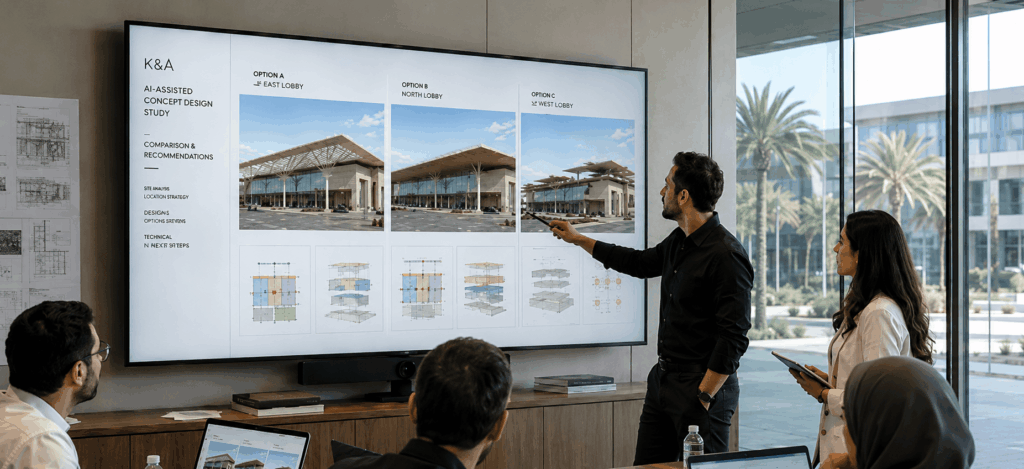
How Design Teams Can Use AI to Make Better Early Decisions
For design teams working on complex facilities, the earliest stages often carry the greatest weight. Before a concept takes shape, teams need to make sense of project complexity and the decisions that will shape cost, delivery, operations, and long-term performance.
This is where AI-assisted workflows can create real value. Drawing on project data, established design knowledge and digital analysis tools, they help teams explore alternatives, understand trade-offs and make more informed choices from the earliest stages of development. This enables more confident concept development while reducing the risk of design changes later in the project lifecycle.
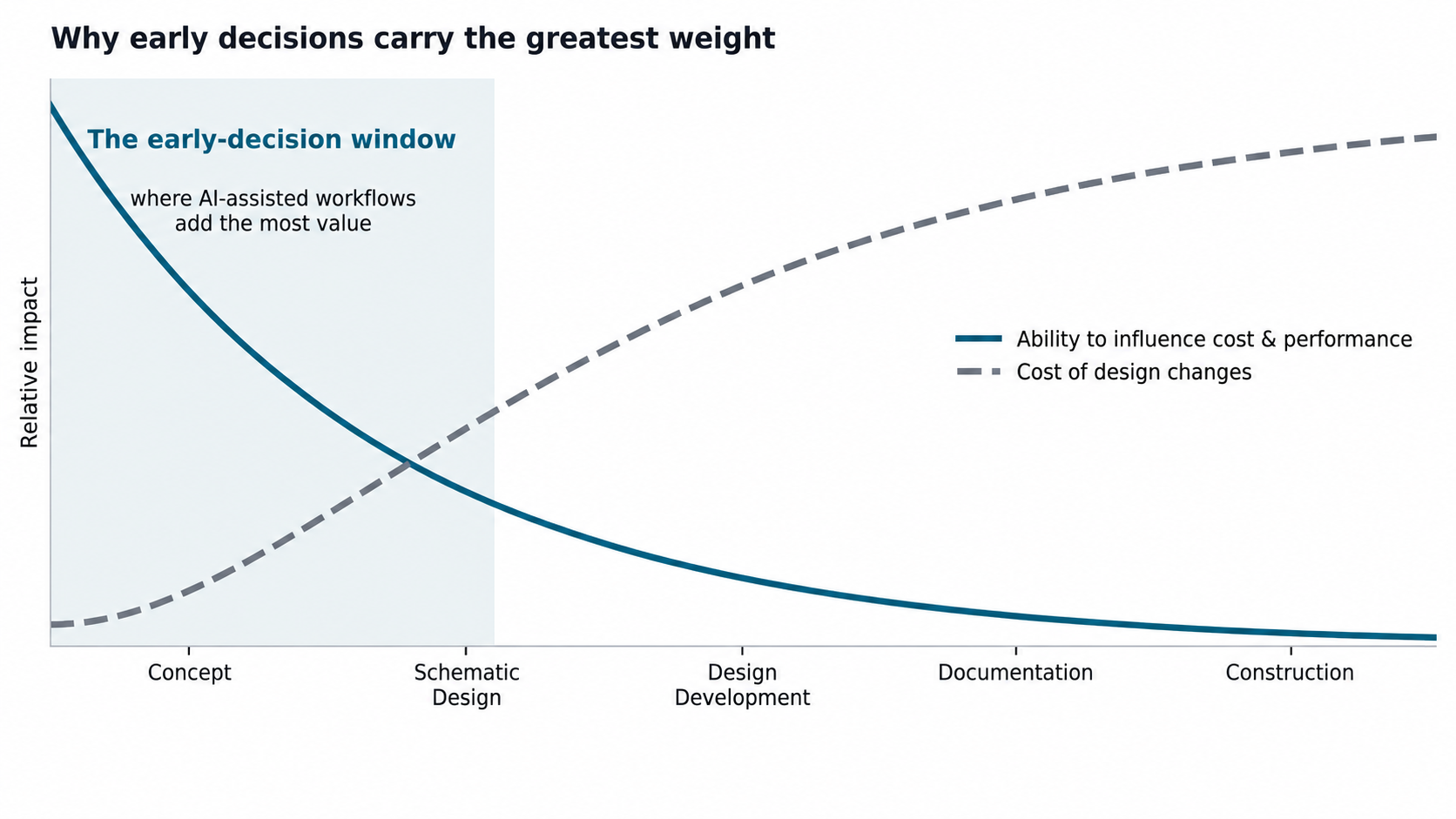
Use AI to Unlock Complexity Early
AI is most useful when it is connected to the decisions a project team needs to make.
This is particularly relevant for complex, multidisciplinary projects where operational needs, movement flows, engineering constraints, phasing, and stakeholder priorities must be understood before a direction is fixed.
Across K&A, these workflows support early tasks such as adjacency and circulation studies, rapid zoning analysis, information structuring, and BIM-integrated concept visualization.
By turning raw project inputs into clearer design options sooner, teams can move faster into scenario testing and decision-making. Instead of asking which option has enough time to be developed, they can ask which direction performs best, where the risks sit, and what trade-offs need to be understood.
In recent K&A applications, preparation work that once required several weeks can now be developed and reviewed in a matter of days. New iterations can also be produced within hours during a working session, allowing several operational and planning scenarios to be evaluated within a single workshop cycle.
On one complex healthcare project, for example, the workflow helped the team visualize and compare a wide set of façade and solar-shading options early. This made it easier to weigh environmental performance against architectural identity and cost before the design direction was fixed.
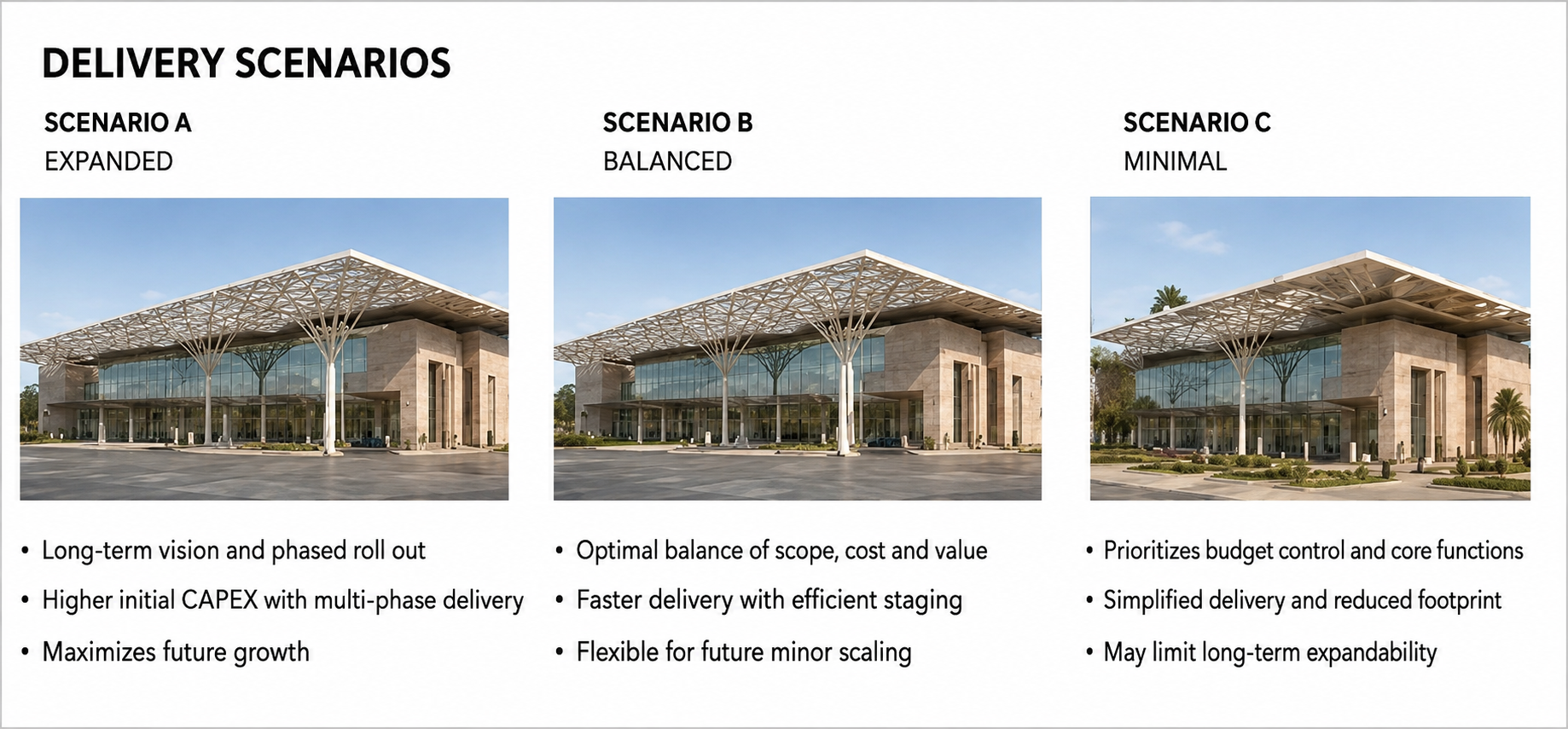
Make Information Decision-Ready
For clients and stakeholders, faster information is useful, but clearer information is more valuable.
This is especially important on complex project typologies such as airport terminals, teaching hospitals, mixed-use districts, specialized industrial facilities, and other projects where early alignment between disciplines is critical.
Because K&A’s design work often involves multidisciplinary specialists, technical disciplines, reviewers, project leaders, and client-facing teams, these workflows can help make information easier to structure and communicate across disciplines.
This allows discussions to move beyond basic explanation and into performance, priorities, risks, user experience, and long-term value.
Keep Professional Judgment at the Center
AI can support analysis and insight, but professional judgment, design responsibility, engineering rigor and contextual understanding remain firmly human responsibilities.
The quality of the final output still depends on review, challenge, refinement, and technical validation by architects, engineers, and project leaders. Outputs checked against project requirements, reviewed by discipline leads, and refined through team workshops ensure they remain technically sound and coordinated.
The objective is to give design teams better tools to reach stronger decisions faster, while keeping accountability, quality control, and final judgment with the professionals responsible for the work.
This is the real opportunity: helping teams read complexity sooner, compare more options, and keep professional judgment focused on the choices that shape the outcome.